
Have you ever started the day feeling comfortable, only to notice that by afternoon your abdomen feels tight, heavy, or unusually full? If you keep asking yourself, “why am i always bloated?”, you are not alone. Bloating is one of the most common digestive complaints, and it can occur even when there is no serious disease.
Bloating is a sensation of fullness, pressure, or swelling in the abdomen. It is different from abdominal distension, which means the abdomen actually becomes visibly larger. The two can occur together, but they do not always. Gas is one contributor, but bloating can also be linked to constipation, food intolerances, changes in gut movement, irritable bowel syndrome, and the way the gut and brain process sensations.
The good news is that persistent bloating is often manageable once you understand your personal triggers. Instead of immediately blaming one food or assuming that your gut microbiome is “damaged,” it is more useful to look at the whole picture: eating habits, bowel movements, food tolerance, activity, stress, medications, and overall digestive health.
Why does bloating happen?
Your digestive tract naturally contains gas. Some gas comes from swallowed air, while some is produced when bacteria in the large intestine ferment carbohydrates that were not completely digested earlier. Eating quickly, drinking fizzy beverages, chewing gum, and certain foods can increase swallowed air or intestinal gas.
However, bloating is not simply a problem of “too much gas.” Some people experience significant discomfort from normal amounts of intestinal gas because their digestive tract is more sensitive or because gas and intestinal contents are not moving normally.
Constipation is another common reason. When stool remains in the colon for longer, people may feel pressure, fullness, or increased bloating. If you have hard stools, fewer bowel movements, straining, or a feeling that you have not completely emptied your bowel, constipation may be part of the answer.
Other possibilities include lactose intolerance, fructose intolerance, irritable bowel syndrome, functional dyspepsia, celiac disease, and, in selected people, small intestinal bacterial overgrowth. These conditions require different approaches, which is why repeatedly eliminating foods without understanding the cause can become frustrating.
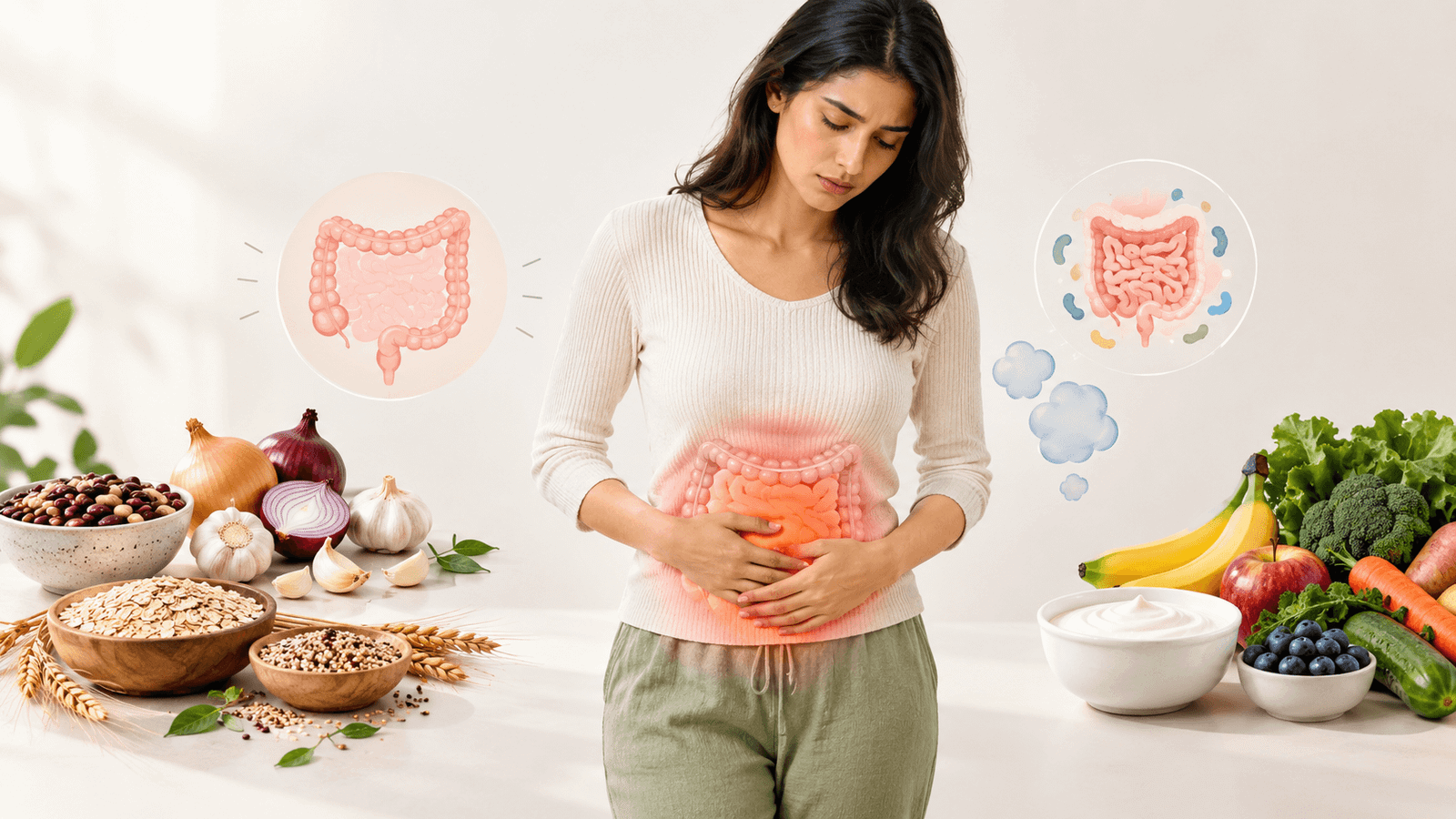
Is your diet making you bloated?
Sometimes the answer is yes—but “healthy” foods can be triggers too.
Beans, lentils, onions, garlic, some vegetables, whole grains, and certain fruits contain fermentable carbohydrates or fibers. These are valuable foods, but when gut bacteria ferment them, gas can be produced. A sudden increase in fiber can therefore cause temporary bloating, particularly if your previous diet was low in fiber.
Large meals can also leave you feeling excessively full. Eating rapidly, swallowing air, drinking carbonated beverages, or eating very fatty meals may worsen symptoms in some people.
The goal is not to create a permanently restrictive diet. Instead, notice patterns. Keep a simple food-and-symptom diary for a couple of weeks and record what you ate, how quickly you ate, your bowel movements, and when bloating appeared. This can reveal whether symptoms are related to specific foods, meal size, timing, or constipation.
The gut health connection
Your gut is home to trillions of microorganisms that interact with the food you eat and with your digestive system. This community, called the gut microbiome, is involved in digestion and many other aspects of health.
If you want to improve gut health, think beyond a single “gut-friendly” product. A diverse, fiber-rich eating pattern generally provides a better foundation than relying on supplements or one fashionable ingredient.
Different fibers nourish different microorganisms. Fruits, vegetables, legumes, whole grains, nuts, and seeds can provide a range of fibers and plant compounds. Increasing variety gradually can support a healthier digestive environment.
But there is an important catch: more fiber is not automatically better for everyone at every moment. If you suddenly double your fiber intake, you may temporarily experience more gas and bloating. Increase fiber gradually and drink enough fluid, particularly when increasing fiber to help with constipation.
Where do prebiotics fit in?
Prebiotics are substances, usually specific types of dietary fiber or carbohydrates, that are used by beneficial microorganisms in the gut. They can be found naturally in foods such as onions, garlic, leeks, asparagus, bananas, oats, legumes, and other plant foods.
Prebiotic foods can be an important part of a diet designed to improve gut health. However, they can also increase fermentation and gas production, especially when introduced quickly or consumed in large amounts. Someone with a sensitive gut may need smaller portions and a slower increase.
So, if a new “gut health food” makes you extremely bloated, that does not necessarily mean the food is bad for you. It may simply mean the amount, timing, or type of fiber does not suit you right now.
What about probiotics and probiotic benefits?
Probiotics are live microorganisms that can provide a health benefit when consumed in adequate amounts. They are found in some fermented foods and are also available as supplements.
The important point is that probiotic effects are strain-specific. Different strains have different evidence and may help with different digestive problems. Therefore, “probiotics” should not be treated as one universal treatment for bloating.
Some people ask about probiotics benefits when they experience frequent gas or abdominal discomfort. Although selected probiotics may help certain gastrointestinal conditions, evidence is not strong enough to say that every probiotic supplement will relieve chronic bloating. In fact, the American Gastroenterological Association advises against using probiotics specifically to treat abdominal bloating and distension.
This is why a food-first approach can be sensible for many people: build a varied diet, identify personal triggers, and use supplements only when there is a clear reason to consider them.
Can kefir and kombucha help?
Kefir and kombucha are popular fermented foods and beverages. Kefir is a fermented milk drink, while kombucha is a fermented tea beverage. They may contain live microorganisms, depending on how they are produced and processed.
Fermented foods can be part of a healthy eating pattern, but they should not be viewed as guaranteed cures for bloating. Not every fermented food contains probiotics with demonstrated health benefits, and heating or processing can reduce or eliminate live microorganisms.
If you tolerate dairy, a plain yogurt or kefir with live cultures may be a practical addition to meals. If you are sensitive to lactose, kefir may be easier for some people to tolerate than ordinary milk, but individual responses vary.
Kombucha deserves a little caution too. Some varieties contain considerable added sugar or carbonation, and carbonation itself can worsen bloating in sensitive people. Start with a small amount rather than assuming that more is better.
What role does constipation play?
If you are frequently bloated and also struggle to pass stool, constipation deserves attention. Healthy digestion is not only about what you eat; it is also about how effectively the digestive tract moves its contents.
For adults, general guidance suggests getting adequate dietary fiber, drinking enough fluids, and staying physically active. Fiber should be increased gradually. Whole grains, vegetables, fruits, beans, nuts, and seeds are useful sources.
Do not ignore the urge to use the toilet, and give yourself enough time rather than repeatedly postponing bowel movements. Regular movement can also support bowel function.
If constipation persists despite lifestyle changes, or if you need frequent laxatives, speak with a healthcare professional. Persistent constipation can have several causes and sometimes requires targeted treatment.
Could food intolerance be the reason?
Food intolerance is different from a food allergy, and digestive symptoms can occur after eating particular carbohydrates or other foods.
Lactose intolerance, for example, can cause bloating, gas, abdominal discomfort, and diarrhea after consuming lactose-containing foods. Some people also experience symptoms after consuming excess fructose or other poorly absorbed carbohydrates.
Rather than removing multiple food groups permanently, identify a reproducible pattern and discuss it with a clinician or dietitian. In people with irritable bowel syndrome, a structured low-FODMAP approach may sometimes be used under professional guidance. It is not intended to become an unnecessarily restrictive lifelong diet.
When should you see a doctor?
Occasional bloating after a large meal is usually not a reason for alarm. But persistent or worsening symptoms deserve attention, particularly when they interfere with daily life.
Seek medical advice if bloating is frequent, severe, suddenly different, or associated with unexplained weight loss, persistent abdominal pain, vomiting, blood in the stool, black stools, fever, difficulty swallowing, loss of appetite, or a significant change in bowel habits.
A healthcare professional may use your symptom history and examination to decide whether testing is appropriate. Depending on the pattern, evaluation may include assessment for constipation, food intolerance, celiac disease, or other gastrointestinal conditions. Extensive testing is not automatically necessary for everyone with bloating.
A practical daily approach to reduce bloating
There is no single “best” anti-bloating routine, but a few habits can support healthy digestion:
Eat slowly. Chew thoroughly and avoid rushing through meals.
Watch portions. Very large meals can increase fullness and discomfort.
Limit fizzy drinks if they trigger symptoms. Carbonation can contribute to belching and bloating.
Increase fiber gradually. Add vegetables, fruits, whole grains, legumes, nuts, and seeds according to your tolerance.
Drink enough fluids. This is particularly important when increasing fiber or managing constipation.
Move regularly. Physical activity can support bowel function and overall digestive health.
Notice your personal triggers. A symptom diary can be more useful than following a generic list of “bad” foods.
Prioritize variety. A diverse plant-rich diet supports the gut microbiome better than repeatedly relying on one supplement or one so-called superfood.
The bottom line
If you keep asking, “why am i always bloated?”, the answer may not be one single food or one missing supplement. Bloating can arise from gas production, constipation, food intolerances, digestive disorders, altered gut sensitivity, or several factors acting together.
To improve gut health, focus on the basics first: a varied, fiber-rich diet, adequate fluids, regular physical activity, slower eating, and attention to your own symptoms. Prebiotics, probiotics, and fermented foods such as kefir and kombucha can fit into a balanced diet, but they are not universal solutions.
Most importantly, persistent bloating should not simply be accepted as something you have to live with. If symptoms are frequent, troublesome, or accompanied by warning signs, getting the right evaluation is more useful than continuing to experiment with restrictive diets. Healthy digestion is personal—and understanding the reason behind your symptoms is the first step toward feeling better.
Medical Disclaimer
This article is intended for general educational and informational purposes only. It is not a substitute for professional medical advice, diagnosis, or treatment, and it should not be used for self-diagnosis or self-treatment. Individual causes of bloating can vary, and information that is appropriate for one person may not be appropriate for another. If you have persistent, severe, worsening, or unexplained symptoms, or any warning signs mentioned in this article, consult a qualified healthcare professional for an appropriate evaluation. Do not start, stop, or change medicines, supplements, restrictive diets, or other treatments based solely on this article. The Wellness Files does not endorse any specific commercial product, supplement, or brand mentioned or discussed in connection with this topic.
References
1. Moshiree B, Drossman D, Shaukat A. AGA Clinical Practice Update on Evaluation and Management of Belching, Abdominal Bloating, and Distention: Expert Review. Gastroenterology. 2023;165(3):791-800.e3. https://pubmed.ncbi.nlm.nih.gov/37452811/
2. National Institute of Diabetes and Digestive and Kidney Diseases. Symptoms & Causes of Gas in the Digestive Tract. National Institutes of Health. https://www.niddk.nih.gov/health-information/digestive-diseases/gas-digestive-tract/symptoms-causes
3. National Institute of Diabetes and Digestive and Kidney Diseases. Eating, Diet, & Nutrition for Constipation. National Institutes of Health. https://www.niddk.nih.gov/health-information/digestive-diseases/constipation/eating-diet-nutrition
4. National Institute of Diabetes and Digestive and Kidney Diseases. Symptoms & Causes of Constipation. National Institutes of Health. https://www.niddk.nih.gov/health-information/digestive-diseases/constipation/symptoms-causes
5. National Institutes of Health, Office of Dietary Supplements. Probiotics: Fact Sheet for Consumers. https://ods.od.nih.gov/factsheets/Probiotics-Consumer/
6. Harvard T.H. Chan School of Public Health, The Nutrition Source. Probiotics for Gut Health. Updated March 4, 2025. https://nutritionsource.hsph.harvard.edu/probiotics/
7. Harvard T.H. Chan School of Public Health, The Nutrition Source. The Microbiome. https://nutritionsource.hsph.harvard.edu/microbiome/
8. Sperber AD, et al. Prevalence and Associated Factors of Bloating: Results From the Rome Foundation Global Epidemiology Study. Gastroenterology. 2023. https://pubmed.ncbi.nlm.nih.gov/37315866/
The Wellness Files | Health & Wellness Education